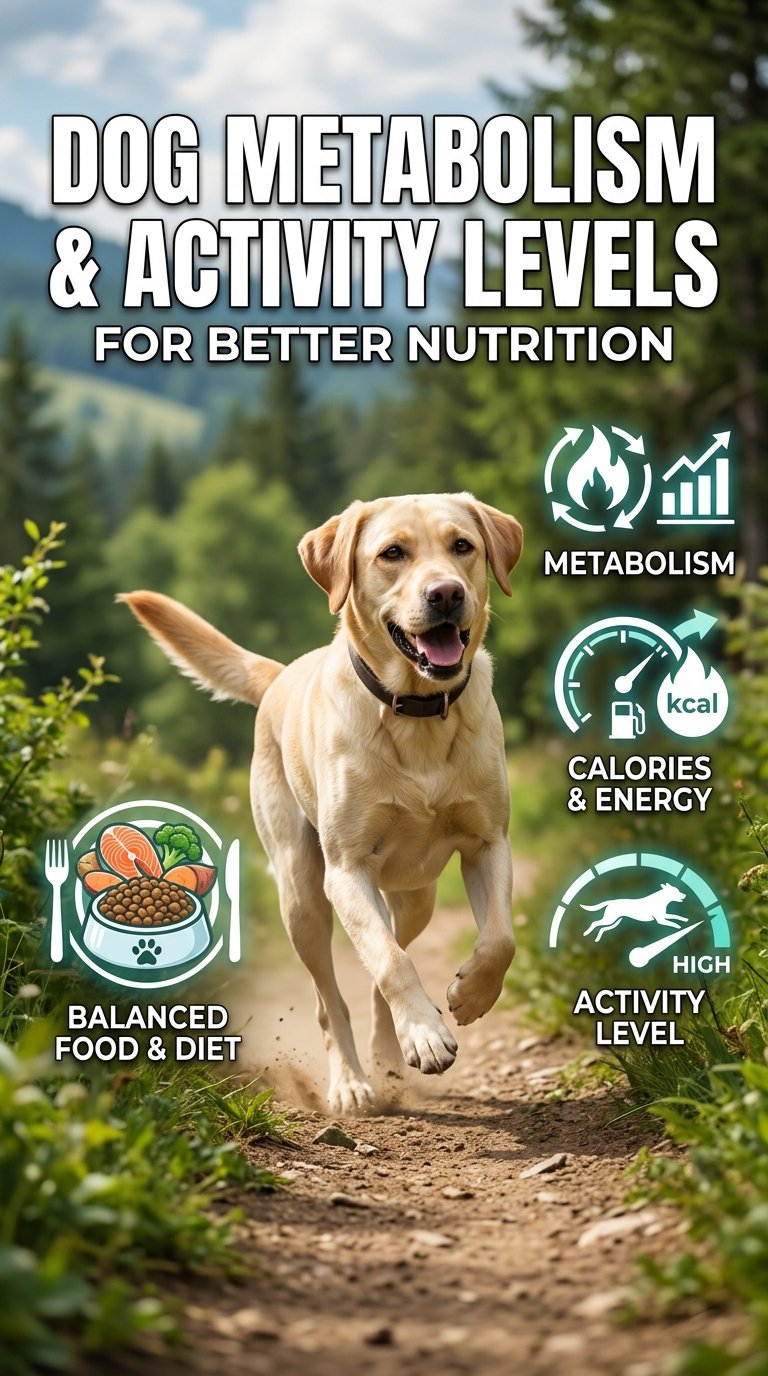

Two dogs can eat the same food, weigh almost the same amount, and still need very different portions.
This is something many dog owners discover when they try to follow a standard feeding chart exactly.
One dog maintains a healthy weight.
The other slowly gains weight.
Or sometimes the opposite happens: a dog appears to eat plenty of food but still struggles to maintain its weight.
The reason is that feeding recommendations are only a starting point.
A dog’s metabolism, daily activity, age, body condition, lifestyle, and health can all affect how much energy the body uses.
Understanding these differences can help you make better decisions about your dog’s daily nutrition.
This does not mean you need to calculate every calorie perfectly every day. For most healthy dogs, careful observation, measured portions, regular weight checks, and veterinary guidance can go a long way.
What Is Dog Metabolism?
Metabolism refers to the processes your dog’s body uses to convert food into energy and maintain normal body functions.
Even when your dog is sleeping, the body is still using energy.
Energy is needed for important functions such as:
- Breathing
- Maintaining body temperature
- Supporting organs
- Circulating blood
- Digesting food
- Repairing tissues
- Maintaining muscle
Then there is additional energy needed for movement and activity.
A dog that spends most of the day resting will generally use energy differently from a dog that spends hours running, training, hiking, or working.
This is one reason why two dogs of the same weight may not need identical portions.
Why Metabolism Matters When Feeding Your Dog
Metabolism affects how your dog uses calories.
Think of calories as fuel.
Your dog needs enough fuel to support:
- Basic body functions
- Daily movement
- Exercise
- Growth
- Recovery
- Maintaining a healthy body condition
Too many calories over time may contribute to weight gain.
Too few calories may contribute to weight loss or difficulty maintaining a healthy body condition.
The goal is not simply to feed the smallest possible amount of food or the largest amount your dog will eat.
The goal is to provide appropriate nutrition for your individual dog.
Factors That Can Affect a Dog’s Metabolism
Several factors can influence your dog’s energy requirements.
Age
Age can affect metabolism and activity.
Puppies
Puppies are growing and developing.
They may require different amounts of energy and nutrients compared with adult dogs.
Their food should be appropriate for their life stage.
Adult Dogs
Adult dogs generally have more stable energy needs.
However, activity level can create major differences between individual dogs.
Senior Dogs
Older dogs may become less active, but not every senior dog has lower energy needs.
Some remain very active.
Others may lose muscle mass or develop health conditions that affect their nutritional requirements.
This is why age alone should not determine how much you feed your dog.
Body Size and Breed
Smaller and larger dogs have different nutritional needs.
A Chihuahua and a German Shepherd obviously do not need the same amount of food.
However, breed size is not the only factor.
Two dogs of similar size can have different activity levels and body compositions.
A muscular, highly active dog may use energy differently from a less active dog with more body fat.
Muscle Mass
Muscle is metabolically active tissue.
Dogs with greater muscle mass may have different energy requirements than dogs with less muscle.
This is another reason why body condition can be more useful than weight alone.
Two dogs can weigh the same but have different body compositions.
One may have a healthy amount of muscle.
The other may carry excess body fat.
The number on the scale does not tell the entire story.
Hormones and Health
Certain health conditions can affect appetite, weight, and energy use.
Unexpected weight changes should not automatically be blamed on metabolism.
Medical problems can sometimes contribute to:
- Weight loss
- Weight gain
- Increased appetite
- Reduced appetite
- Changes in activity
If your dog’s weight changes significantly without an obvious reason, speak with a qualified veterinarian.
Understanding Your Dog’s Activity Level
Many feeding guides divide dogs into broad activity categories.
A simple approach is to consider three levels:
- Low activity
- Moderate activity
- High activity
These categories are not perfect, but they can help you estimate your dog’s energy needs.
Low-Activity Dogs
A low-activity dog may:
- Spend much of the day resting
- Take short walks
- Have limited structured exercise
- Spend most of its time indoors
This does not mean the dog is unhealthy.
Some dogs naturally have calmer lifestyles.
However, lower activity may mean the dog needs fewer calories than a highly active dog of the same weight.
Moderately Active Dogs
Many family pets fall into this category.
A moderately active dog may:
- Go for regular daily walks
- Play during the day
- Spend time outdoors
- Participate in moderate exercise
A standard feeding recommendation may be a reasonable starting point for this type of dog.
However, you should still monitor body condition.
Highly Active Dogs
Highly active dogs may include:
- Sporting dogs
- Working dogs
- Dogs that run regularly
- Dogs participating in training
- Dogs that hike frequently
- Dogs with long daily exercise sessions
These dogs may use significantly more energy.
A highly active dog may need more food than a relaxed dog of the same weight.
However, more activity does not automatically mean unlimited food.
The amount should still be monitored based on body condition and overall health.
A Simple Activity-Level Comparison
| Activity Level | Typical Lifestyle | General Nutrition Consideration |
|---|---|---|
| Low | Mostly resting with light exercise | May require fewer calories |
| Moderate | Regular walks and daily play | Standard feeding guide may be a starting point |
| High | Long exercise sessions or working activities | May require additional energy |
| Very High | Intense work or athletic activity | May require specialized nutritional planning |
This table is intended as a general guide rather than a medical feeding prescription.
Why the Same Feeding Chart Does Not Work for Every Dog
Imagine two dogs.
Both weigh 25 kilograms.
Dog A
- Sleeps most of the day
- Takes two short walks
- Plays occasionally
Dog B
- Runs regularly
- Goes hiking
- Participates in training
- Spends several hours exercising
Giving both dogs exactly the same number of calories may not produce the same results.
Dog A may gradually gain weight.
Dog B may struggle to maintain its weight.
This is why feeding charts should be treated as starting points.
How to Estimate Your Dog’s Activity Level
Ask yourself a few simple questions:
How much time does my dog exercise each day?
What type of exercise does my dog perform?
Does my dog spend most of the day resting?
Has my dog’s routine changed recently?
Is my dog gaining or losing weight?
You can track activity using tools such as:
- Smartphone health apps
- GPS dog collars
- Pet activity trackers
- Daily walking logs
- Simple notes apps
You do not need expensive technology.
Even a simple weekly record can help you notice changes.
How to Adjust Food Based on Activity
If your dog becomes more active, do not immediately double the food portion.
Instead, make gradual adjustments.
Step 1: Measure the Current Portion
Know exactly how much food your dog currently receives.
Use:
- A measuring cup
- A digital kitchen scale
Step 2: Monitor Weight and Body Condition
Watch for changes over several weeks.
Consider:
- Weight
- Waist shape
- Ability to feel the ribs
- Muscle condition
Step 3: Review Treat Intake
An active dog may receive additional treats during training.
Those calories should be considered as part of the overall diet.
Step 4: Make Small Adjustments
If an otherwise healthy dog is losing weight while maintaining high activity, discuss the situation with your veterinarian.
Small feeding adjustments may be appropriate depending on the dog’s needs.
Body Condition Is More Important Than the Food Bowl
A dog can appear satisfied after eating and still be receiving too many or too few calories.
Instead of focusing only on whether the bowl is empty, look at the dog’s overall condition.
A healthy body condition often includes:
- A visible waist when viewed from above
- A reasonable abdominal tuck
- Ribs that can generally be felt without excessive pressure
Breed differences can affect appearance.
Long-haired dogs can also make visual evaluation more difficult.
When in doubt, ask your veterinarian to assess your dog’s body condition.
The Role of Calories in Dog Nutrition
Calories provide energy.
But the quality of the diet matters too.
Dogs need appropriate amounts of nutrients such as:
- Protein
- Fat
- Vitamins
- Minerals
- Essential nutrients
Simply reducing the amount of food without considering nutritional balance may not be appropriate.
For example, if a dog needs weight management, your veterinarian may recommend changes to both calorie intake and food type.
How Exercise Changes Nutritional Needs
Exercise can affect calorie requirements.
However, not all exercise is equal.
A slow 20-minute walk is different from:
- Running
- Agility training
- Long-distance hiking
- Working activities
The intensity and duration of activity matter.
A dog that suddenly begins a new exercise program may need time to adjust.
Monitor:
- Energy
- Appetite
- Weight
- Recovery
- Hydration
Seasonal Changes Can Affect Activity
Many dogs are more active during certain seasons.
For example, your dog may spend more time walking and playing outdoors during pleasant weather.
During very hot or cold periods, activity may decrease.
This can affect energy needs over time.
Review food portions when your dog’s routine changes significantly.
Neutering and Spaying: Why Monitoring Matters
Changes in hormones and lifestyle can influence weight management.
This does not mean every neutered or spayed dog will automatically become overweight.
However, monitoring weight and food portions after major life changes is sensible.
If activity decreases while food intake stays the same, weight gain may gradually occur.
Common Mistakes When Considering Dog Metabolism
Assuming Every Dog of the Same Weight Needs the Same Food
Weight is important, but it is not the only factor.
Overestimating Activity
A dog that takes a short walk and then sleeps all day may not have the same energy needs as a working dog.
Be realistic.
Forgetting About Treats
Training treats, dental chews, and table food can add extra calories.
Ignoring Gradual Weight Changes
Small changes can become significant over time.
Regular weighing helps.
Blaming Everything on a “Slow Metabolism”
Unexpected weight changes can sometimes indicate health problems.
Speak with a veterinarian when changes are unexplained.
Tools That Can Help You Manage Your Dog’s Nutrition
You do not need complicated equipment.
A few basic tools can make feeding more consistent.
Digital Kitchen Scale
Useful for accurately measuring food portions.
Measuring Cup
Helpful for maintaining consistent portions.
Smartphone Notes App
Useful for tracking:
- Meals
- Treats
- Weight changes
- Exercise
Spreadsheet
Google Sheets or Microsoft Excel can help you track:
- Weekly weight
- Daily food
- Treat intake
- Activity
Pet Activity Tracker
Optional devices can provide additional information about movement patterns.
These tools can be useful, but they do not replace professional veterinary advice.
A Simple Weekly Nutrition Check
Once a week, take a few minutes to review your dog’s routine.
Ask:
- Has activity increased?
- Has activity decreased?
- Has weight changed?
- Are treats increasing?
- Has appetite changed?
- Has the dog started a new exercise routine?
Small adjustments are often easier than waiting until a major weight problem develops.
A Practical Example
Imagine an adult dog that normally receives two cups of food each day.
During winter, the dog becomes less active.
Daily walks become shorter, and the dog spends more time indoors.
The owner continues feeding the same amount without checking body condition.
After several months, the dog gains noticeable weight.
Instead of making a dramatic change, the owner should review:
- Total food intake
- Treat calories
- Activity changes
- Body condition
A veterinarian can then help determine whether dietary changes are appropriate.
This example shows why nutrition should change when a dog’s lifestyle changes.
When to Contact a Veterinarian
Contact a qualified veterinarian if you notice:
- Sudden weight loss
- Rapid weight gain
- Major appetite changes
- Extreme tiredness
- Vomiting
- Diarrhea
- Significant changes in thirst
- Difficulty maintaining weight
Nutrition problems are not always caused by feeding mistakes.
Health conditions can also affect weight and appetite.
Final Thoughts
Understanding your dog’s metabolism and activity level can make feeding decisions much easier.
Instead of treating a feeding chart as an exact rule, use it as a starting point. Then pay attention to your dog’s lifestyle, body condition, age, exercise, treats, and overall health.
Measure food instead of guessing. Track major changes in activity. Check your dog’s weight regularly. Most importantly, avoid making large dietary changes based only on an online chart.
The best nutrition routine is one that fits your individual dog and is adjusted as its needs change. If you are unsure about your dog’s ideal weight or calorie intake, a qualified veterinarian can help you create a safer and more appropriate feeding plan.