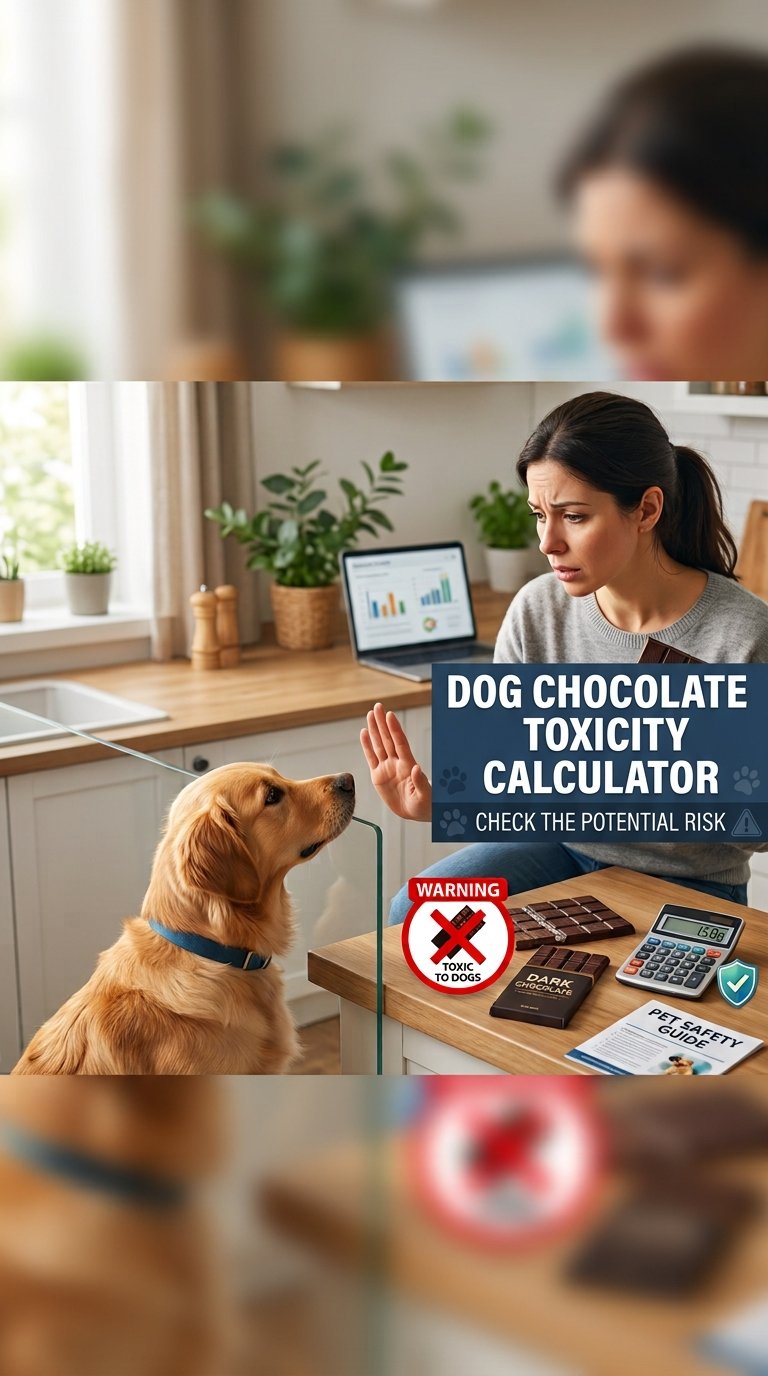

🍫 Dog Chocolate Toxicity Calculator
Few situations make a dog owner panic faster than discovering that their dog has eaten chocolate.
Maybe you left a chocolate bar on a table for a few minutes. Maybe your dog found candy in a bag. Or perhaps a child accidentally dropped a piece of chocolate on the floor.
The first reaction is usually the same:
How much chocolate did my dog eat, and is it dangerous?
Our Dog Chocolate Toxicity Calculator is designed to help provide a general risk estimate based on information such as your dog's body weight, the type of chocolate, and the approximate amount consumed.
However, the most important thing to understand is this:
A calculator cannot diagnose chocolate poisoning or replace emergency veterinary advice.
If you believe your dog has eaten a potentially dangerous amount of chocolate, contact a veterinarian or an animal poison service as soon as possible.
The sooner you get professional guidance, the better equipped you will be to respond appropriately.
Why Is Chocolate Dangerous for Dogs?
Chocolate contains naturally occurring substances called:
- Theobromine
- Caffeine
Dogs process these substances differently from humans.
Depending on the amount consumed, a dog's size, the type of chocolate, and individual factors, chocolate ingestion can cause potentially serious health problems.
Not all chocolate contains the same amount of theobromine.
This is why identifying the type of chocolate is important.
How the Dog Chocolate Toxicity Calculator Works
The calculator estimates potential risk by considering several important factors.
These may include:
- Dog's weight
- Chocolate type
- Approximate amount eaten
- Estimated concentration of chocolate compounds
The result can provide a general warning level.
For example, the calculator may indicate that the reported amount appears lower risk or that urgent professional advice may be needed.
The calculator should never be used to guarantee that a dog is safe.
Individual reactions can vary.
Step 1: Enter Your Dog's Weight
A dog's body size can influence the potential effect of chocolate.
A small amount that may be less concerning for a large dog could represent a greater concern for a small dog.
Enter your dog's current weight as accurately as possible.
The calculator may allow you to use:
- Kilograms
- Pounds
If you are unsure about your dog's weight, a recent veterinary record may provide a more reliable figure.
Step 2: Select the Type of Chocolate
Different chocolate products can contain different amounts of cocoa solids and potentially harmful compounds.
Common categories may include:
- White chocolate
- Milk chocolate
- Dark chocolate
- Baking chocolate
- Cocoa powder
In general, products containing higher concentrations of cocoa may present greater concern.
However, ingredient formulations vary.
Always try to identify the exact product and keep the packaging if possible.
Step 3: Estimate How Much Was Consumed
Enter the most accurate estimate possible.
Useful information can include:
- Number of pieces
- Weight in grams
- Weight in ounces
- Size of the chocolate bar
If you are unsure how much your dog ate, avoid assuming the smallest possible amount.
Tell the veterinarian what you know and provide the product packaging when possible.
Step 4: Check the Warning Result
The calculator may provide a general risk category based on the information entered.
For example:
Lower Estimated Risk
The reported amount may be less likely to cause serious toxicity based on general calculations.
Moderate Concern
Professional advice may be appropriate, especially depending on timing and individual circumstances.
Higher Concern
Prompt veterinary or poison-control guidance may be necessary.
These categories are general estimates.
A lower calculator result does not guarantee that your dog will not become sick.
Why Dog Weight Matters
Chocolate exposure is often discussed relative to body size.
A small dog may receive a higher exposure relative to body weight after eating the same amount of chocolate as a larger dog.
For example, imagine:
Dog A
5 kilograms.
Dog B
35 kilograms.
If both dogs consume the same amount of dark chocolate, the potential exposure relative to their body size may be very different.
This is why your dog's weight is an important calculator input.
Why the Type of Chocolate Matters
One of the biggest mistakes people make is treating all chocolate as identical.
Chocolate products can vary significantly.
Generally, the concentration of cocoa-related compounds can differ between products.
A product with a higher cocoa content may present more concern than one with lower cocoa content.
However, product formulations vary.
Always check:
- The ingredient label
- Cocoa percentage
- Product type
- Amount consumed
If possible, take the packaging with you when seeking professional advice.
Chocolate Products That May Cause Additional Problems
Chocolate is not the only concern.
Some chocolate products contain additional ingredients that may create separate risks.
Examples include products containing:
- Raisins
- Macadamia nuts
- Xylitol or other sweeteners
- Alcohol
- High levels of fat
These ingredients may require additional medical attention.
When contacting a veterinarian, mention every ingredient listed on the package.
Possible Signs After Chocolate Ingestion
Signs can vary depending on the amount and type of chocolate consumed.
Potential symptoms may include:
- Restlessness
- Vomiting
- Diarrhea
- Increased thirst
- Increased urination
- Rapid heart rate
- Tremors
- Weakness
More serious reactions can occur.
Do not wait for symptoms to become severe before seeking professional advice if a significant exposure is suspected.
What Should You Do If Your Dog Eats Chocolate?
A calm and organized response is helpful.
Step 1: Remove Access to the Chocolate
Prevent your dog from eating more.
Also keep packaging and wrappers away from other pets.
Step 2: Identify the Product
Try to determine:
- The type of chocolate
- Brand or product name
- Cocoa percentage if listed
- Other ingredients
Keep the package.
Step 3: Estimate the Amount Eaten
Try to determine:
- How much was originally available
- How much remains
- How much may have been consumed
If you cannot estimate the amount, tell the veterinarian.
Step 4: Note the Time
Try to remember approximately when your dog ate the chocolate.
Timing can be important when discussing the situation with a veterinary professional.
Step 5: Use the Calculator as an Initial Information Tool
Enter the information carefully.
Use the result as general guidance rather than a final diagnosis.
Step 6: Contact a Professional When Concerned
If the calculator indicates a potentially significant risk, or if you are unsure about the amount consumed, contact:
- Your veterinarian
- An emergency veterinary clinic
- An animal poison service where available
Do not rely on internet advice alone during a possible poisoning emergency.
Do Not Try to Treat Chocolate Poisoning at Home Without Professional Advice
Online advice may suggest different home remedies.
Avoid giving medications or attempting to induce vomiting unless a qualified veterinary professional specifically instructs you to do so.
The correct response can depend on:
- The product consumed
- The amount
- Your dog's size
- Time since ingestion
- Your dog's health
Incorrect home treatment can create additional risks.
Common Mistakes After a Dog Eats Chocolate
Waiting for Symptoms
Some owners assume the dog is safe because it appears normal immediately after eating chocolate.
Professional advice may still be important depending on the circumstances.
Assuming All Chocolate Is the Same
Different chocolate products can have different concentrations of relevant compounds.
Ignoring Other Ingredients
A chocolate product may contain other substances that are dangerous to dogs.
Guessing the Amount
Try to provide the best estimate possible.
Keep the packaging for reference.
Relying Completely on a Calculator
The calculator provides an estimate.
It cannot evaluate your dog's current condition or replace professional medical care.
How to Prevent Dogs From Eating Chocolate
Prevention is much easier than dealing with an emergency.
Store chocolate:
- In closed cupboards
- Away from counters
- Outside your dog's reach
- In secure containers
During holidays and celebrations, pay extra attention to:
- Candy bowls
- Gift bags
- Children's snacks
- Chocolate desserts
Teach children and guests not to leave chocolate where pets can reach it.
Frequently Asked Questions
Can a small amount of chocolate hurt a dog?
The potential risk depends on factors such as the dog's weight, the type of chocolate, the amount consumed, and the specific product.
If you are concerned, contact a veterinary professional.
Is dark chocolate more dangerous than milk chocolate?
Chocolate products with higher concentrations of cocoa may contain higher levels of compounds that are potentially toxic to dogs.
However, exact products vary.
Is white chocolate safe for dogs?
White chocolate generally differs from dark chocolate in cocoa-related content, but it can still cause problems because of ingredients such as fat and sugar.
Do not intentionally feed chocolate products to dogs.
How quickly do symptoms appear?
The timing of symptoms can vary depending on the circumstances.
Do not wait for symptoms if you believe your dog consumed a potentially dangerous amount.
Can I use this calculator instead of calling a veterinarian?
No.
The calculator provides an informational estimate only.
It cannot diagnose poisoning or determine whether your dog needs medical treatment.
Important Emergency Disclaimer
This Dog Chocolate Toxicity Calculator is an informational tool designed to provide a general estimate based on the information entered.
It is not a substitute for veterinary diagnosis, emergency treatment, or professional poison-control advice.
If your dog has eaten chocolate and you believe there may be a significant exposure, or if your dog shows concerning symptoms, contact a veterinarian or emergency veterinary service promptly.
Do not intentionally induce vomiting or give medications unless specifically instructed by a qualified veterinary professional.
Keep the chocolate packaging available so you can provide accurate information about the product.
Final Thoughts
A dog eating chocolate can be stressful, especially when you do not immediately know how much was consumed or whether the type of chocolate is dangerous.
A Dog Chocolate Toxicity Calculator can help organize important information by considering your dog's weight, the chocolate type, and the approximate amount eaten.
However, the calculator should always be viewed as an initial information tool rather than a medical decision-maker.
When possible, identify the exact product, estimate the amount consumed, note the time of exposure, and keep the packaging.
If there is any concern about a significant exposure or your dog develops symptoms, professional veterinary guidance is the safest next step.
Quick action and accurate information can make it easier for veterinary professionals to assess the situation and advise you appropriately.