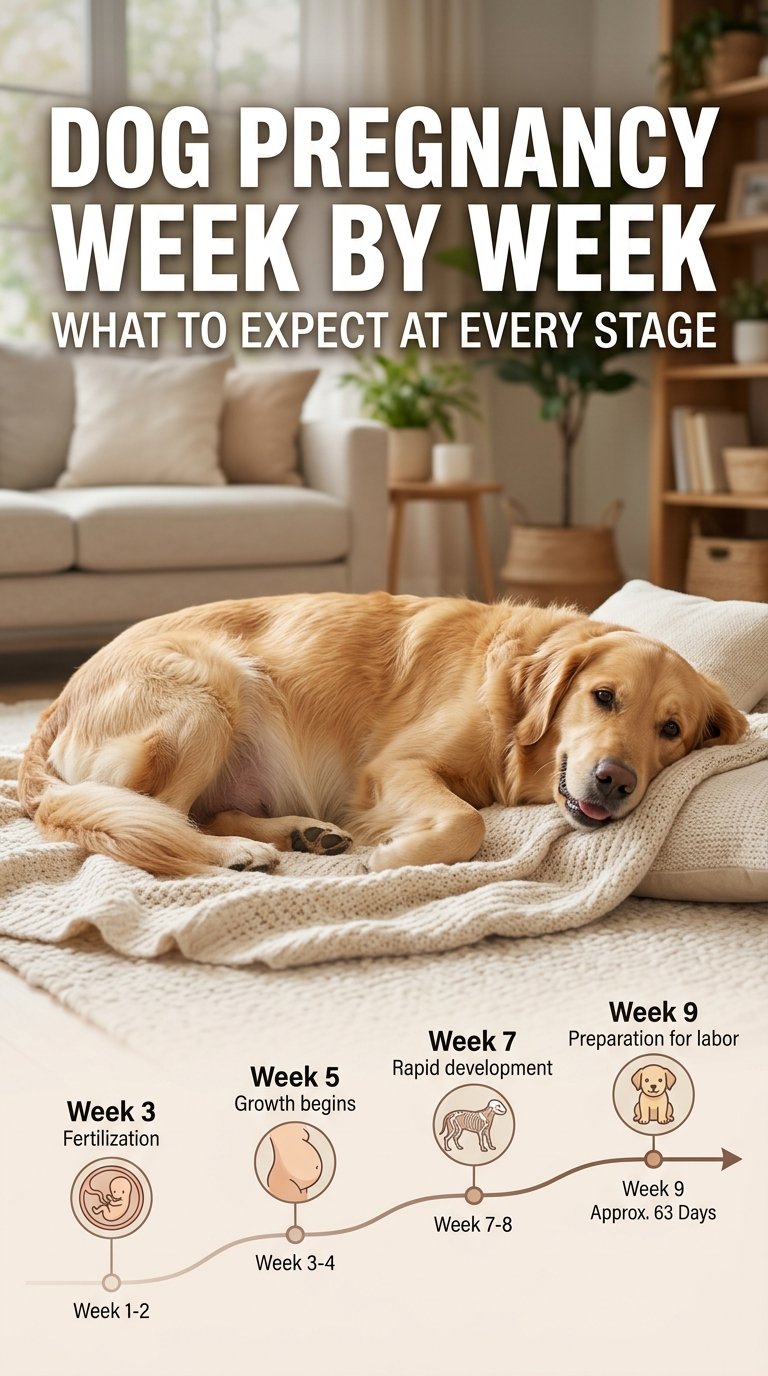

Discovering that your dog may be pregnant can bring excitement, questions, and sometimes a little anxiety.
Many owners immediately start searching for answers:
How long is a dog’s pregnancy?
When will her belly start growing?
When should I change her food?
How do I know when labor is getting close?
A dog’s pregnancy is relatively short compared with human pregnancy, but a lot happens during those weeks. Changes can be subtle at first and become more noticeable as the pregnancy progresses.
This guide walks through the general stages of dog pregnancy week by week, including common physical changes, general puppy development, and practical ways to prepare.
Every pregnancy is different. This guide is educational and should not replace care from a qualified veterinarian.
How Long Is a Dog’s Pregnancy?
Dog pregnancy, also called gestation, is commonly described as lasting around 63 days, although the exact timing can vary depending on how pregnancy is measured and when breeding or ovulation occurred.
This is why predicting an exact delivery date based only on the breeding date can sometimes be difficult.
Veterinary guidance can help confirm pregnancy and monitor the mother’s health.
Before the Weekly Pregnancy Timeline: Confirming Pregnancy
A dog may not show obvious signs of pregnancy during the first few weeks.
Possible changes can include:
- Changes in appetite
- Mild behavior changes
- Changes in energy
- Physical changes later in pregnancy
However, these signs alone do not confirm pregnancy.
Some dogs can experience false pregnancy or other conditions that cause similar changes.
A veterinarian can use appropriate methods to help confirm pregnancy and monitor the mother.
Week 1: Early Pregnancy
During the first week after fertilization, there may be no obvious external changes.
Your dog may:
- Behave normally
- Eat normally
- Continue regular activities
At this stage, it is usually too early to confirm pregnancy based on appearance.
Avoid making major changes to diet or exercise without veterinary guidance.
If pregnancy is possible, this is a good time to review your dog’s overall health and discuss appropriate care with a veterinarian.
Week 2: Early Development Continues
During the second week, the pregnancy may still not be visible.
Most dogs continue to appear normal.
You may not notice:
- Weight gain
- Belly enlargement
- Major physical changes
This is why guessing pregnancy based only on appearance is unreliable during the early stages.
Keep your dog’s routine stable and monitor for unusual symptoms.
Week 3: Subtle Changes May Begin
Some dogs may experience subtle changes around this stage.
Possible changes can include:
- Changes in appetite
- Slight behavior changes
- Changes in energy
These signs are not guaranteed and can occur for many reasons.
Do not assume pregnancy based on behavior alone.
If pregnancy confirmation is needed, speak with a veterinarian about appropriate options and timing.
Week 4: Pregnancy May Become Easier to Confirm
By around the fourth week, veterinary examination may provide more useful information about pregnancy.
Depending on the situation and veterinary methods available, pregnancy may be evaluated using appropriate diagnostic tools.
Some owners may begin noticing subtle physical changes.
However, every dog is different.
Do not attempt to examine or press on your dog’s abdomen yourself.
Improper handling could cause discomfort or injury.
Week 5: Noticeable Changes May Begin
Around the middle stage of pregnancy, some dogs may begin showing more noticeable changes.
Possible signs can include:
- Gradual weight gain
- Increased appetite
- Changes in body shape
- Mammary gland development
Your dog’s nutritional needs may begin changing as pregnancy progresses.
However, overfeeding is not automatically helpful.
Speak with your veterinarian about appropriate nutrition.
Week 6: Increased Nutritional and Physical Changes
During this stage, the developing puppies are growing more rapidly.
The mother may begin showing more obvious physical changes.
You may notice:
- A larger abdomen
- Increased appetite
- More frequent rest
- Changes in comfort
It can be helpful to provide a comfortable and quiet environment.
Keep fresh water available.
Week 7: Preparing for the Final Weeks
As the pregnancy progresses, your dog may become less comfortable.
Her abdomen may continue growing.
Some dogs may:
- Rest more frequently
- Seek quiet areas
- Become more affectionate
- Prefer additional personal space
This can be a good time to begin preparing a suitable whelping area.
The area should be:
- Clean
- Quiet
- Comfortable
- Easy to monitor
Avoid placing the mother in an unfamiliar or stressful environment.
Week 8: Nesting Behavior May Begin
During the final stage of pregnancy, some dogs begin showing nesting behavior.
They may:
- Rearrange bedding
- Search for quiet spaces
- Spend more time in their prepared area
- Become restless
Prepare necessary supplies before labor begins.
Useful items may include:
- Clean bedding
- Fresh towels
- A safe whelping area
- A way to contact your veterinarian or emergency clinic
Avoid unnecessary handling or stressful activity.
Week 9: Preparing for Birth
The final days of pregnancy can involve noticeable behavioral changes.
Some dogs may become:
- Restless
- More attached to their owners
- Interested in nesting
- Less interested in food
However, pregnancy timelines vary.
Do not rely on a single sign to predict the exact start of labor.
If you have concerns about timing or your dog’s condition, contact your veterinarian.
Understanding the Three Main Stages of Dog Labor
When labor begins, it is generally described in stages.
Stage One: Early Labor
This stage may involve behavioral changes such as:
- Restlessness
- Nesting
- Panting
- Seeking privacy
The duration can vary.
Stage Two: Delivery of Puppies
During this stage, puppies are delivered.
The timing and number of puppies can vary.
If you are concerned about prolonged labor, distress, or other unusual signs, contact a veterinarian promptly.
Stage Three: Delivery of Placental Tissue
Placental tissue is expelled during the birthing process.
The timing can vary between puppies.
If you have concerns about retained tissue or the mother’s health, seek veterinary guidance.
Nutrition During Dog Pregnancy
Nutrition is important during pregnancy, but pregnancy does not mean automatically doubling the food portion.
A pregnant dog may have changing nutritional requirements as pregnancy progresses.
Your veterinarian can recommend an appropriate diet based on:
- Body condition
- Breed size
- Stage of pregnancy
- Number of developing puppies
- Overall health
Fresh water should always be available.
Avoid making major dietary changes suddenly without professional guidance.
Exercise During Pregnancy
Many pregnant dogs can continue normal, gentle activity during at least part of pregnancy, depending on their health.
Suitable activity may include:
- Calm walks
- Gentle movement
- Normal daily activity
As pregnancy progresses, some dogs may naturally reduce activity.
Avoid forcing strenuous exercise.
Speak with your veterinarian about an appropriate activity plan.
Preparing a Whelping Area
A comfortable birthing area can help reduce stress.
Consider choosing a location that is:
- Quiet
- Warm
- Clean
- Away from household traffic
- Easy to monitor
Prepare the area before labor begins so your dog has time to become comfortable with it.
Essential Preparation Checklist
Before the expected birth period, prepare:
- Clean towels
- Fresh bedding
- A clean whelping area
- Your veterinarian’s contact information
- Emergency veterinary contact information
- A way to safely transport the mother if needed
Keep the area calm and organized.
Signs You Should Contact a Veterinarian
Pregnancy and labor can sometimes involve complications.
Contact a qualified veterinarian if you notice concerning changes such as:
- Severe weakness
- Collapse
- Significant distress
- Heavy bleeding
- Signs of severe pain
- Prolonged difficulty during labor
- A sudden major change in behavior or health
If you are unsure whether something is normal, it is better to contact a veterinary professional for guidance.
Common Mistakes During Dog Pregnancy
Overfeeding Too Early
Pregnancy does not automatically mean that a dog needs dramatically larger food portions immediately.
Skipping Veterinary Care
Professional monitoring can help identify problems that may not be visible at home.
Changing Food Suddenly
Sudden dietary changes may cause digestive problems.
Assuming Every Pregnancy Looks the Same
Dogs can experience pregnancy differently.
Waiting Too Long During an Emergency
If the mother appears seriously unwell or distressed, contact veterinary care promptly.
Frequently Asked Questions
How long is a dog pregnant?
Dog pregnancy is commonly around 63 days, although timing can vary depending on how pregnancy is measured.
When does a dog’s belly start showing?
Visible changes can vary depending on the dog’s size, body condition, and number of puppies.
Can I confirm pregnancy at home?
Physical signs alone are not a reliable confirmation. A veterinarian can provide appropriate pregnancy assessment.
Should I give my pregnant dog extra food?
Nutritional needs can change during pregnancy, but overfeeding is not automatically appropriate. Ask your veterinarian for guidance.
When should I prepare the whelping area?
Preparing the area before the final weeks can give your dog time to become comfortable with the space.
Important Disclaimer
This guide provides general educational information about dog pregnancy and is not a substitute for veterinary diagnosis or treatment.
Every dog and pregnancy is different.
A qualified veterinarian should provide individualized advice about pregnancy confirmation, nutrition, monitoring, labor, and potential complications.
If your dog appears unwell, distressed, or experiences unusual symptoms during pregnancy or labor, contact a veterinarian or emergency veterinary clinic promptly.
Final Thoughts
A dog pregnancy moves quickly, and the early weeks may pass without obvious changes. As the pregnancy progresses, physical changes become more noticeable and preparation becomes increasingly important.
The most useful approach is to monitor your dog carefully, maintain a calm routine, provide appropriate nutrition and fresh water, and stay in contact with a qualified veterinarian.
Preparing early for the final weeks can make the experience less stressful for both you and your dog. A quiet whelping area, organized supplies, and a plan for veterinary support can help you feel more prepared when the puppies finally arrive.