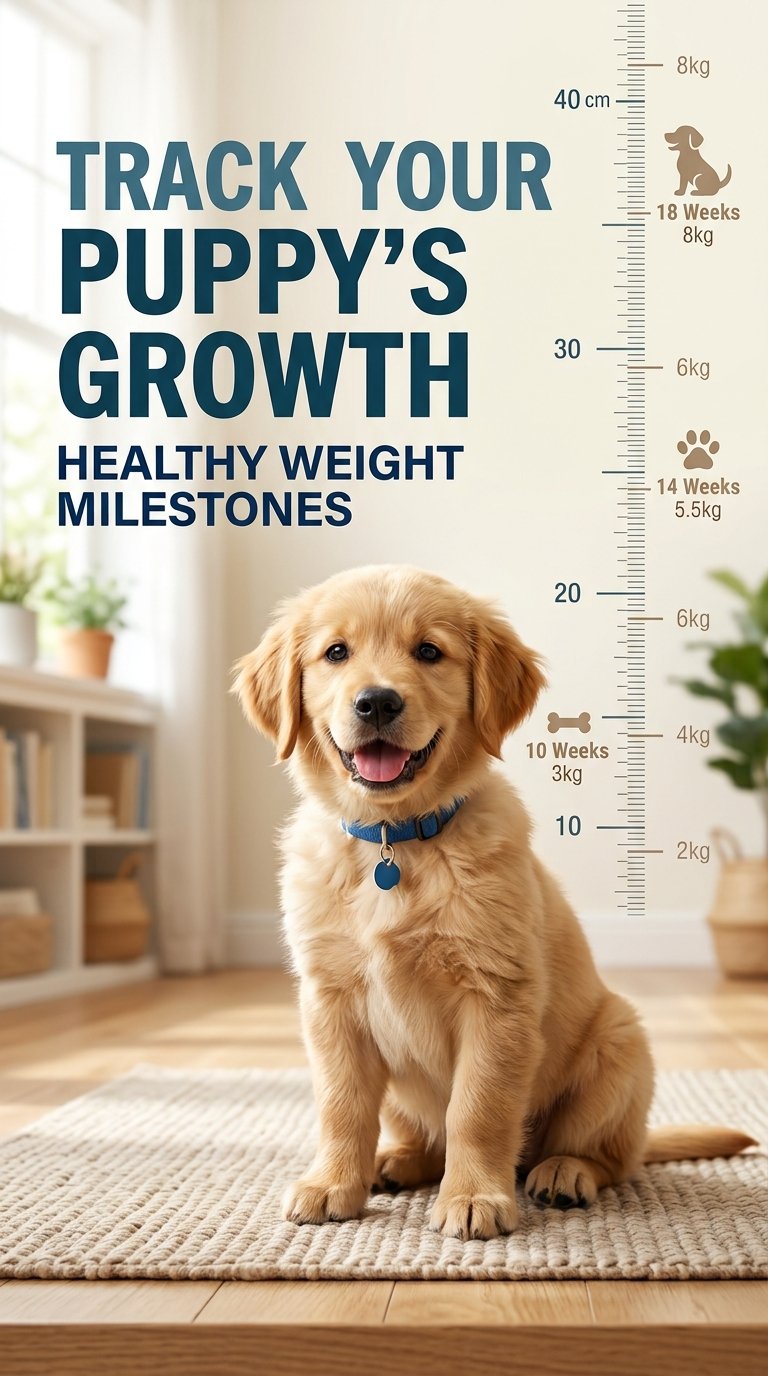

Bringing home a puppy can feel like watching a completely new animal appear every few weeks.
One month, your puppy looks tiny enough to fit comfortably in your arms. A few weeks later, the same puppy seems to have longer legs, bigger paws, and a noticeably different body shape.
Because puppies grow quickly, many owners ask an important question:
How do I know whether my puppy is growing at a healthy rate?
Tracking your puppy’s growth does not require expensive equipment or complicated software. A reliable scale, simple records, and regular observation can provide useful information about changes over time.
The goal is not to make your puppy match an exact number on the internet.
Healthy growth depends on factors such as:
- Breed
- Expected adult size
- Genetics
- Nutrition
- Age
- Activity
- Overall health
This guide explains how to track puppy growth, monitor healthy weight milestones, and recognize when a change may be worth discussing with a veterinarian.
Why Tracking Puppy Growth Matters
A puppy’s weight can provide useful information about development.
Regular tracking may help you notice:
- Steady growth
- Unexpected weight loss
- Sudden changes
- Differences between littermates
- Changes in appetite or development
One weight measurement does not tell you very much.
The pattern over time is more useful.
For example, imagine recording your puppy’s weight once.
The number may not tell you whether the puppy is growing normally.
Now imagine recording weight regularly over several weeks.
You can see whether growth is generally progressing, slowing, or changing unexpectedly.
That pattern provides more useful information.
What You Need to Track Puppy Growth
You only need a few basic tools.
A Reliable Digital Scale
For very young puppies, a small digital scale that measures accurately may be useful.
For larger puppies, you may use:
- A pet scale
- A veterinary scale
- A home scale when appropriate
The important thing is to measure consistently.
A Growth Record
You can use:
- A notebook
- A printed puppy growth chart
- Google Sheets
- Microsoft Excel
- A smartphone notes app
A simple table can work well.
| Date | Puppy Age | Weight | Notes |
|---|---|---|---|
| Week 1 | 7 days | Record weight | Normal feeding |
| Week 2 | 14 days | Record weight | Active |
| Week 3 | 21 days | Record weight | Appetite normal |
You can also add notes about appetite, energy, and major developmental changes.
How Often Should You Weigh Your Puppy?
The ideal schedule can depend on the puppy’s age and circumstances.
Very young puppies may require closer monitoring, especially under veterinary guidance.
As puppies become older and more stable, weight checks may become less frequent.
A practical routine for many owners is to weigh the puppy consistently and record the result.
The key is consistency.
Try to weigh your puppy:
- At approximately the same time
- Using the same scale
- Under similar conditions
This can make the results easier to compare.
Step-by-Step Guide to Tracking Puppy Weight
Step 1: Record Your Puppy’s Starting Weight
Start with the most accurate weight available.
Write down:
- Date
- Age
- Weight
If you know the breed or expected adult size, record that information as well.
Step 2: Create a Regular Schedule
Choose a schedule you can realistically maintain.
Consistency is more useful than measuring randomly.
For example, you might check your puppy on the same day each week.
Step 3: Record the Results
Do not rely on memory.
Record every measurement.
Even a simple note can help.
Example:
12 weeks: 6.4 kg. Appetite normal. Energy high. Growing steadily.
Step 4: Watch the Trend
Look at changes over time.
Ask:
- Is the puppy generally gaining weight?
- Has growth suddenly slowed?
- Has the puppy lost weight?
- Are there changes in appetite?
One unusual measurement may be caused by differences in weighing conditions.
A repeated trend is usually more meaningful.
Understanding Puppy Growth Stages
Puppies grow through several stages.
Growth rates can vary significantly.
Newborn Stage
Newborn puppies are completely dependent on their mother.
Regular monitoring can be especially important.
Breeders may track:
- Birth weight
- Feeding
- Daily or frequent weight changes
Any concerns about a newborn puppy should be discussed with a veterinarian.
Early Puppy Stage
As puppies become more mobile and begin exploring, their nutritional needs and activity levels change.
Growth can still be rapid.
This is a period where regular monitoring can help track development.
Rapid Growth Stage
Many puppies experience noticeable physical growth during the first several months.
Large breeds may continue growing for longer periods than smaller breeds.
You may notice:
- Larger paws
- Longer legs
- Changes in body shape
- Rapid increases in size
Adolescent Stage
Growth may begin slowing as the puppy approaches adulthood.
However, some breeds continue developing physically for an extended period.
Large and giant breeds may mature more slowly.
Why Breed Size Matters
A Chihuahua and a Great Dane do not follow the same growth pattern.
Small breeds often reach their adult size sooner.
Large and giant breeds may continue growing and developing for much longer.
This means comparing your puppy with a random puppy growth chart online may not always be useful.
Whenever possible, compare your puppy’s growth with information appropriate for:
- Breed
- Expected adult size
- Individual genetics
Mixed-breed puppies may be more difficult to predict.
Healthy Weight Is Not Just About a Number
A puppy can have a weight that looks normal on paper but still have an unhealthy body condition.
Veterinarians often evaluate body condition by considering factors such as:
- Rib visibility and feel
- Waist shape
- Abdominal appearance
- Muscle condition
Do not attempt to make your puppy reach a specific number simply because you saw it online.
Healthy development is individual.
Creating a Puppy Growth Chart
A growth chart can make progress easier to understand.
Record:
- Age
- Weight
- Height, if useful
- Major developmental notes
Digital tools can help.
For example, you can enter weekly weights into Google Sheets and create a simple line graph.
The graph may make trends easier to see.
However, a notebook works perfectly well too.
Nutrition and Puppy Growth
Nutrition plays an important role in development.
Puppies require diets formulated for their stage of growth.
Choosing food based only on price or packaging can create problems.
Consider:
- Life-stage suitability
- Breed size
- Expected adult size
- Veterinary recommendations
Large-breed puppies may have different nutritional considerations than small breeds.
Avoid adding supplements unless recommended by a qualified veterinary professional.
More supplements do not automatically mean better growth.
Exercise and Healthy Development
Puppies need activity and play.
However, exercise should generally be appropriate for:
- Age
- Breed
- Physical development
- Individual health
Very young puppies are still developing.
Avoid forcing intense exercise simply because you want faster muscle development.
Normal play and age-appropriate activity are generally more suitable.
Ask your veterinarian for guidance if you have questions about your puppy’s activity needs.
Warning Signs to Watch For
Growth patterns should generally be reviewed if you notice:
- Weight loss
- Poor appetite
- Persistent vomiting
- Persistent diarrhea
- Extreme tiredness
- Sudden changes in behavior
- Failure to grow as expected
These signs do not automatically identify the cause.
A veterinarian can evaluate the puppy and determine whether further testing or treatment is needed.
Common Puppy Growth Tracking Mistakes
Comparing Every Puppy to the Same Chart
Breed and genetics matter.
Weighing Inconsistently
Using different scales can make comparisons difficult.
Ignoring Weight Loss
Unexpected weight loss should not simply be ignored.
Overfeeding to Make a Puppy Grow Faster
Faster growth is not necessarily healthier growth.
Avoid increasing food dramatically without appropriate guidance.
Ignoring Body Condition
The scale is only one part of monitoring health.
Frequently Asked Questions
How often should I weigh my puppy?
The best schedule depends on the puppy’s age and circumstances. Very young puppies may need closer monitoring, while older puppies may be weighed less frequently.
How quickly should a puppy gain weight?
Growth rates vary significantly based on breed, size, genetics, and nutrition. Look at the overall trend rather than expecting every puppy to gain the same amount.
What if my puppy loses weight?
Unexpected weight loss, especially if repeated or accompanied by other symptoms, should be discussed with a veterinarian.
Can I use a human scale?
For larger puppies, a human scale may sometimes provide a general estimate. Smaller puppies may require a more sensitive scale.
When will my puppy stop growing?
This varies by breed and size. Small breeds often mature sooner, while large and giant breeds may continue developing for a longer period.
Important Disclaimer
This article provides general educational information about tracking puppy growth and weight.
It is not a substitute for veterinary diagnosis or individualized nutritional advice.
Puppy growth varies based on breed, genetics, expected adult size, nutrition, health, and other factors.
If your puppy experiences unexplained weight loss, poor appetite, persistent digestive symptoms, weakness, or unusual developmental changes, contact a qualified veterinarian.
Final Thoughts
Tracking your puppy’s growth is one of the simplest ways to understand how your puppy is developing over time.
You do not need expensive equipment or complicated software. A reliable scale and consistent records can provide useful information.
The most important thing is to focus on patterns rather than obsessing over a single number.
Every puppy grows differently. Breed, genetics, nutrition, and lifestyle all play a role.
Regular weight tracking, appropriate nutrition, age-appropriate activity, and routine veterinary care can help you monitor your puppy’s development while allowing your puppy to grow at its own natural pace.