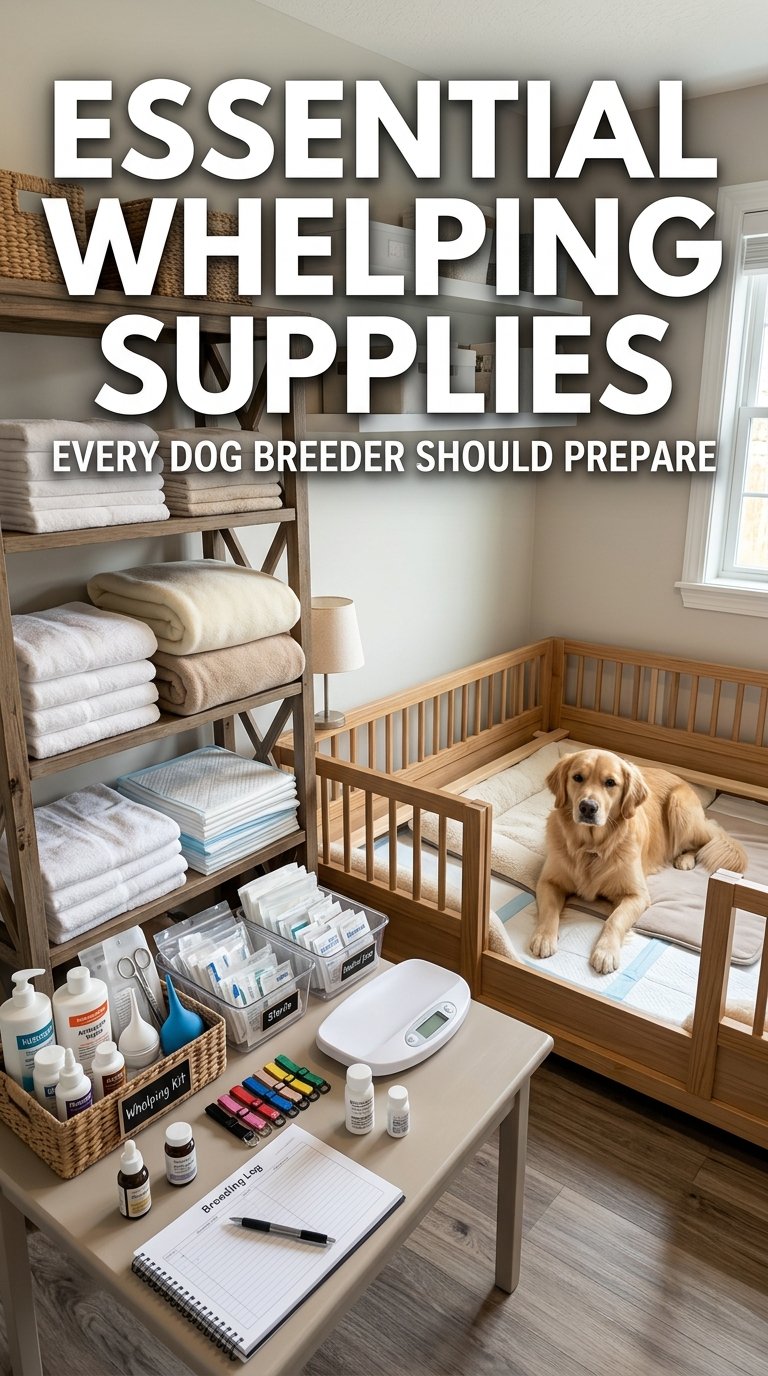

Preparing for a litter of puppies can be exciting, but it is also one of those situations where being organized before labor begins makes a huge difference.
The last thing most people want is to start searching through cupboards for clean towels or trying to find an emergency veterinary phone number while their dog is already in labor.
A well-prepared whelping area does not need to look like a veterinary hospital. What matters is having a clean, safe environment and knowing when professional help is needed.
This guide covers practical supplies commonly used when preparing for whelping and caring for newborn puppies. It is designed as a preparation checklist rather than a substitute for veterinary training or emergency care.
If you are new to breeding, speak with a qualified veterinarian well before the expected delivery date and develop an emergency plan in advance.
Start With a Safe Whelping Area
The whelping area is where the mother will rest and give birth.
Choose a location that is:
- Quiet
- Clean
- Easy to monitor
- Away from household traffic
- Comfortable for the mother
The goal is to create a calm environment without unnecessary disturbance.
Some dogs prefer privacy, while others may want their owner nearby.
It is helpful to introduce the mother to the area before labor begins so the location does not feel unfamiliar.
A Suitable Whelping Box
A whelping box provides a defined area for the mother and puppies.
When choosing one, consider:
- Enough space for the mother to lie comfortably
- Safe sides that help contain puppies
- Easy cleaning
- Smooth surfaces without sharp edges
- Appropriate size for the breed
The box should not be so small that the mother feels restricted.
At the same time, a very large space can make it more difficult to monitor newborn puppies.
Inspect the whelping box carefully before use.
Clean and Replaceable Bedding
Bedding is one of the most important supplies.
You will likely need more than you expect because bedding may need frequent replacement.
Useful options may include:
- Clean washable blankets
- Flat bedding
- Puppy-safe absorbent materials
- Clean towels
Avoid materials that can create entanglement or other hazards for newborn puppies.
Keep several clean replacements ready.
Clean Towels
Clean towels are useful for general preparation and cleanup.
Keep several freshly washed towels available.
A practical approach is to organize them before the expected delivery period.
Store them somewhere easy to reach.
Disposable Gloves
Disposable gloves can help maintain hygiene during cleanup and when handling materials.
Keep multiple pairs available.
Use clean gloves when appropriate and follow veterinary guidance regarding any situation involving direct assistance during delivery.
Puppy Identification Supplies
If you expect multiple puppies, identification can help you track:
- Birth order
- Weight
- Feeding
- General development
Depending on the method used, identification should be safe and appropriate for newborn puppies.
A simple record system may include:
- Notebook
- Printed puppy record sheet
- Spreadsheet
- Smartphone notes app
Avoid using identification methods that could injure or restrict the puppy.
A Digital Scale
A reliable digital scale can be useful for monitoring newborn puppy weight.
Regular weight records can help you identify whether puppies appear to be gaining appropriately.
Record information consistently.
For example:
| Puppy | Date | Weight | Notes |
|---|---|---|---|
| Puppy 1 | Day 1 | Record weight | Normal observations |
| Puppy 2 | Day 1 | Record weight | Feeding observations |
A spreadsheet using Google Sheets or Microsoft Excel can make tracking easier.
If you notice concerns about a puppy’s feeding or weight, contact a veterinarian.
Thermometer and Environmental Monitoring
Newborn puppies are sensitive to environmental conditions.
Monitoring the whelping environment can be helpful.
Useful tools include:
- Room thermometer
- Hygrometer
- Safe environmental monitoring equipment
Avoid creating excessive heat.
Any heating setup should be carefully planned to prevent burns, overheating, or dehydration.
Follow veterinary guidance for appropriate environmental conditions for the mother and puppies.
Safe Heating Equipment
Depending on the environment and veterinary recommendations, supplemental heat may be needed.
Potential options can include equipment specifically designed for safe animal care.
Important safety considerations include:
- Avoid direct overheating
- Ensure puppies can move away from the heat source
- Keep electrical equipment secure
- Monitor the temperature regularly
Never assume that more heat is always better.
Overheating can also create serious problems.
Fresh Water and Food for the Mother
Keep fresh water easily accessible.
The mother may need to drink regularly.
Food requirements can vary depending on:
- Breed
- Body condition
- Stage of lactation
- Number of puppies
- Veterinary recommendations
Discuss appropriate nutrition with your veterinarian.
Avoid making sudden dietary changes during an already stressful period unless advised by a professional.
Puppy Record-Keeping Supplies
Good record keeping can be surprisingly useful.
You may want to track:
- Birth time
- Birth weight
- Feeding observations
- Daily weight
- General behavior
- Veterinary visits
A simple notebook works.
However, digital tools can also help.
Useful options include:
- Google Sheets
- Microsoft Excel
- Smartphone notes apps
- Pet record apps
Keep records simple enough that you will actually maintain them.
Cleaning and Sanitation Supplies
The whelping area should be cleaned carefully and regularly.
Useful preparation items may include:
- Disposable gloves
- Puppy-safe cleaning products
- Paper towels
- Waste bags
- Clean replacement bedding
Avoid strong products or chemicals that could be harmful around newborn puppies.
Choose cleaning methods appropriate for animals and follow product instructions.
Emergency Contact Information
This is one of the most important things to prepare.
Before labor begins, save:
- Your regular veterinarian’s phone number
- Local emergency veterinary clinic information
- Directions to the emergency clinic
Do not wait until an emergency happens to search for this information.
Keep the details somewhere easy to access.
For example:
- Phone contacts
- Printed emergency card
- Notes near the whelping area
A Reliable Transport Plan
Think about what you would do if the mother or a puppy needed urgent veterinary care.
Consider:
- Who will drive?
- What vehicle is available?
- How will you safely transport the dog?
- Where is the nearest emergency veterinary clinic?
Planning this ahead of time can save valuable time during an emergency.
Basic Whelping Preparation Checklist
Here is a practical checklist.
Whelping Area
- Whelping box
- Clean location
- Replaceable bedding
- Environmental monitoring
Hygiene
- Clean towels
- Disposable gloves
- Puppy-safe cleaning supplies
- Waste bags
Monitoring
- Digital scale
- Puppy records
- Notebook or spreadsheet
- Thermometer
Mother Care
- Fresh water
- Appropriate food
- Comfortable resting area
Emergency Preparation
- Veterinarian contact information
- Emergency clinic details
- Transport plan
What You Should Not Do Without Veterinary Guidance
Whelping can sometimes become complicated.
Avoid attempting medical procedures without appropriate veterinary instruction.
Do not:
- Give medications without professional advice
- Attempt invasive procedures
- Pull forcefully on a puppy
- Assume prolonged distress is normal
- Ignore signs that concern you
If something appears wrong, contact a veterinarian.
Common Whelping Preparation Mistakes
Waiting Until Labor Starts
Preparation is much easier before labor begins.
Using Too Much Bedding
Thick or loose materials can sometimes make monitoring difficult.
Keep the area practical and easy to clean.
Ignoring Temperature Safety
Both cold and overheating can create problems.
Monitor the environment carefully.
Not Tracking Puppy Weight
Weight records can help identify changes that may not be obvious visually.
Having No Emergency Plan
Every breeder should know who to contact if urgent veterinary care is needed.
How to Organize Your Whelping Supplies
A simple organization system can reduce stress.
Consider preparing:
One Main Whelping Box
For items needed during normal monitoring.
One Cleaning Container
For hygiene and cleanup supplies.
One Emergency Information Folder
Containing:
- Veterinary contacts
- Pregnancy records
- Important notes
- Transport information
Keep everything together and easy to find.
Frequently Asked Questions
When should I prepare whelping supplies?
Preparing supplies before the final weeks of pregnancy can help avoid last-minute stress.
Do I need a whelping box?
A safe and defined area can help provide a comfortable environment for the mother and puppies.
Why should newborn puppies be weighed?
Regular weight monitoring can help track growth and identify potential concerns that may need veterinary attention.
How often should the whelping area be cleaned?
Cleanliness needs can vary, but bedding and surfaces should be monitored regularly and replaced or cleaned when necessary using safe methods.
Should I assist with the birth?
Many dogs can give birth without direct intervention. If you are unsure about what is happening or notice distress, contact a veterinarian rather than attempting procedures without professional guidance.
Important Disclaimer
This article provides general educational information about preparing for dog whelping.
It is not veterinary advice and should not replace professional guidance from a qualified veterinarian.
Dog pregnancy and delivery can involve serious complications.
Before breeding or preparing for a litter, discuss pregnancy monitoring, nutrition, delivery planning, and emergency procedures with a veterinarian.
If the mother appears distressed, seriously unwell, or experiences difficulty during labor, contact a veterinarian or emergency veterinary clinic promptly.
Final Thoughts
The best whelping supply kit is not necessarily the largest or most expensive one.
The most useful preparation focuses on cleanliness, organization, safe monitoring, and having professional support available when needed.
Prepare the whelping area early. Keep clean supplies ready. Track important information about the mother and puppies. Most importantly, have veterinary and emergency contact information available before labor begins.
Being prepared cannot prevent every complication, but it can make the whelping period more organized and help you respond more calmly when something unexpected happens.